RAMpocalypse 2026: Why DRAM Prices Are Exploding
The AI boom didn't just steal GPUs. It stole the memory those GPUs run on — and the fallout has hit every PC, laptop, console, and server on the planet.
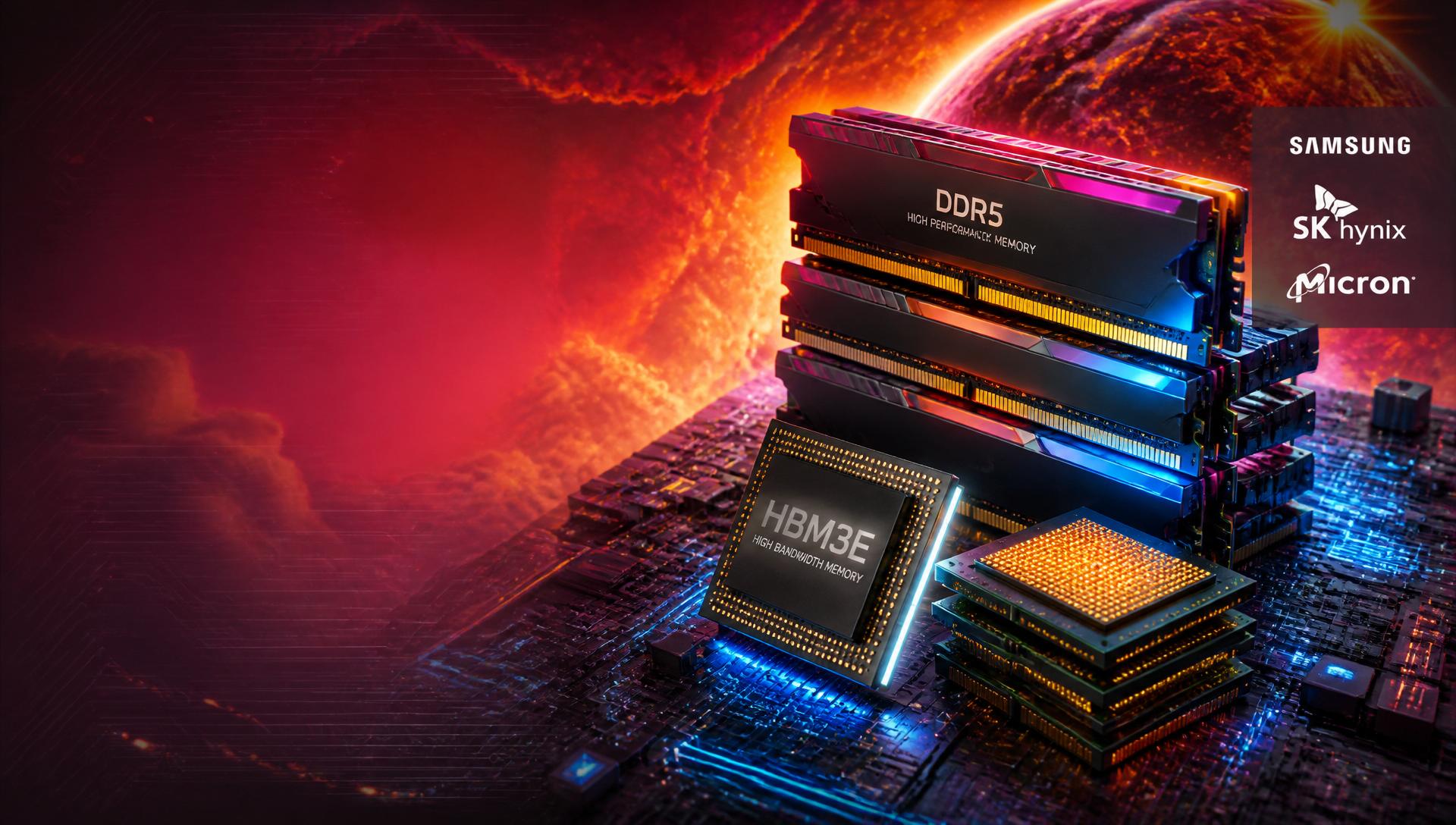
We're in the middle of a global memory shortage — call it "RAMmageddon" or the "RAMpocalypse." Unlike past chip crunches, this one isn't a supply-chain hiccup. Samsung, SK Hynix, and Micron have deliberately pivoted fab capacity from consumer DRAM to High Bandwidth Memory (HBM) for AI accelerators. Consumer DDR5 kits have doubled or tripled, DDR4 is being squeezed, and OEMs are warning of 15–30% price hikes on entire laptops and pre-builts.
The core cause: the AI tax
The explosion of generative AI created an insatiable demand for High Bandwidth Memory (HBM) and enterprise-grade server DRAM. HBM is the stacked, ultra-fast memory soldered next to every NVIDIA H200, B200, B300, and AMD MI350 die — without it, the GPU starves.
Because the DRAM industry is dominated by just three players — Samsung, SK Hynix, and Micron — they've collectively pivoted limited fab capacity away from consumer-grade memory and toward these lucrative AI chips. Producing HBM requires significantly more silicon wafer space per bit than standard RAM. When a fab builds one HBM stack, it's sacrificing the production capacity of multiple consumer RAM sticks.
Why this shortage is different
HBM3E and HBM4 burn far more silicon per bit than commodity RAM. Every HBM stack a fab ships displaces multiple consumer DIMMs from the wafer queue.
Samsung, SK Hynix, and Micron control >95% of DRAM output. When all three pivot the same way, the market has nowhere else to go.
Hyperscalers have signed multi-year HBM allocations through 2027. This isn't a holiday spike — it's a re-architecting of the fab base.
Legacy nodes are being retired to free capacity, so DDR4 supply is shrinking even as buyers downgrade to escape DDR5 prices. Prices have doubled or tripled in months.
Current market impact
The situation for everyday consumers and hardware buyers is rough. Standard memory is seeing unprecedented price hikes, and the ripple is already in finished products:
- Exploding prices. Standard 32GB (2×16GB) DDR5 kits that ran $100–$200 late last year now command $350–$450+ — if you can find them in stock at all.
- DDR4 is not safe. Even older DDR4 has doubled or tripled as buyers downgrade to save money, squeezing the remaining legacy supply.
- Collateral damage at OEMs. Major PC makers like Lenovo, Dell, and HP are warning of 15% to 30% price increases on entire laptops and pre-built PCs. Device makers are also freezing RAM upgrades — many 2026 smartphones and laptops are now shipping with lower base memory specs than originally planned, just to keep costs manageable.
- Gaming hardware delays. Next-gen consoles, handhelds, and refresh systems (including Valve's upcoming hardware) are facing retail price premiums and shipping delays.
What it means for AI and mining operators
If you're running enterprise GPU servers, the picture is split. HBM allocation is the bottleneck — HGX B200, B300, and GB200 NVL72 systems are quoting longer lead times, and pricing for any rack with stacked memory has firmed. Secondary-market value of installed AI infrastructure is going up, not down.
For crypto miners eyeing the AI pivot, RDIMM costs for inference hosts are climbing in lockstep — budget accordingly. Existing fleets running fixed-function ASICs (BTC, LTC/DOGE, KAS, ZEC) are insulated: ASIC miners don't use DRAM the way GPUs do, so the memory crunch barely touches per-hash economics.
Mining hardware pricing is decoupled from DRAM — a rare island of stability.
HBM allocation is the gating factor on every B200/B300 build through 2026.
If you can wait on a PC or console refresh, do — pricing should ease into 2027.
When does it end?
New fab capacity from Samsung's Pyeongtaek P4 and Micron's Idaho expansion comes online through 2027, but most of that wafer output is already earmarked for HBM4. Don't expect consumer DDR5 to revisit 2024 prices anytime soon — the most realistic forecast is a gradual normalization through late 2027, with a permanent step-up in the floor price of all memory.
This isn't a chip shortage. It's a structural reallocation of the entire DRAM industry toward AI — and consumers are paying the rent.