World's First BM1373 Solo Bitcoin Miner is Here: Nexus S1
A desk-sized lottery ticket running the same silicon as the Antminer S21.
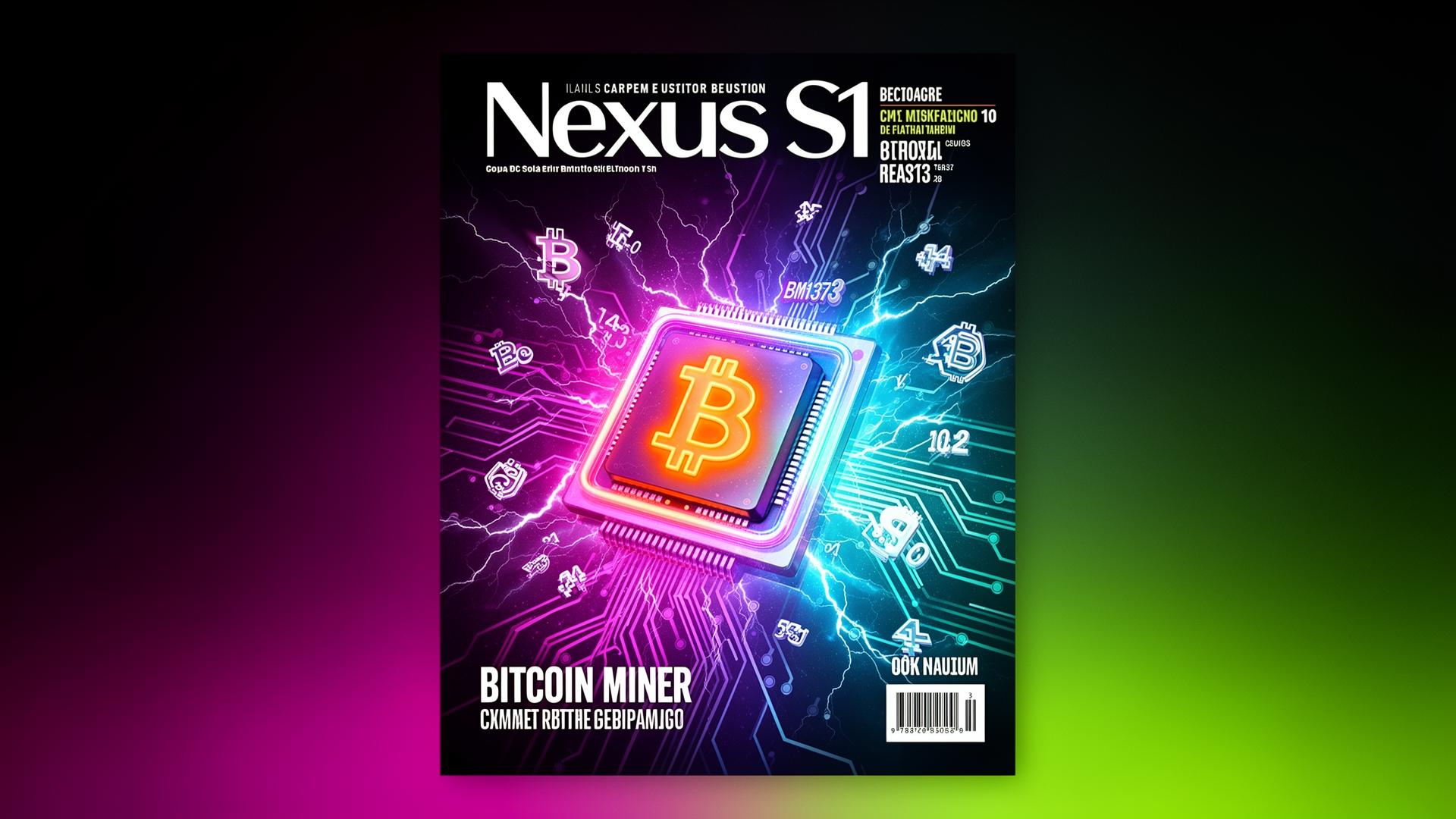
The Nexus S1 is the first solo miner shipping with Bitmain's flagship BM1373 ASIC chip — the same generation powering the Antminer S21. It draws ~20W from a normal wall outlet, fits on a desk, and gives any home miner a real (if long) shot at a full 3.125 BTC block reward.
What makes the Nexus S1 different
Until now, hobby-grade solo miners (Bitaxe, NerdMiner and friends) ran older generations of Bitmain silicon — BM1366, BM1368, BM1370. The Nexus S1 is the first solo miner to ship with the BM1373, the same chip that powers Bitmain's flagship Antminer S21 series.
Translation: roughly 1.2 TH/s of real hashrate at around 20W — efficiency you previously had to buy a 3,500W industrial unit to touch. It's a tiny machine that mines on Bitcoin's main network exactly like a data-center rig, just with one chip instead of hundreds.
How it works
Bitcoin mining is a guessing game. Every ~10 minutes, miners worldwide race to find a SHA-256 hash below the current network target. The Nexus S1 does exactly that — its single BM1373 chip runs trillions of hash attempts per second.
In solo mode, you don't share a reward with a pool. If your S1 finds the winning hash, the entire block reward — currently 3.125 BTC plus fees — lands in your wallet. The catch: the odds are mathematical.
Setting it up — in 4 steps
USB-C / barrel power into any standard 5V wall adapter. No 220V circuit, no industrial PSU.
Connect to the Nexus AP, hand it your SSID & password, and it grabs an IP on your network.
Open the web UI at its local IP. Add your BTC address as the worker — solo CKpool, public-pool.io, or your own node.
Live hashrate, chip temp, fan RPM, accepted shares, and a counter for your odds against the current network difficulty.
Energy costs — the honest math
At ~20W continuous draw, the Nexus S1 is one of the cheapest things you'll ever plug into a wall. Here's what running it 24/7 actually costs at a few common electricity rates:
| Rate | Per day | Per month | Per year |
|---|---|---|---|
| $0.08 / kWh | $0.04 | $1.15 | $14.02 |
| $0.15 / kWh | $0.07 | $2.16 | $26.28 |
| $0.30 / kWh | $0.14 | $4.32 | $52.56 |
Roughly 480 Wh per day — less than most desk lamps. For the price of a couple of coffees a month, you keep a real BM1373 ASIC hashing against Bitcoin's mainnet around the clock.
The S1 isn't an ROI machine — it's the cheapest ticket ever sold to Bitcoin's lottery, with a real BM1373 punching the numbers.
Should you buy one?
- • You want to support the network as a sovereign node + miner.
- • You love the lottery upside of a real solo block hit.
- • You want a silent, desk-friendly intro to ASIC mining.
- • You need predictable monthly BTC income → buy an S21 instead.
- • You can't tolerate years of zero rewards before a possible hit.
- • You already run a hosted fleet at industrial rates.