SK Hynix: 2027 Is the Worst Year of the Memory Shortage — And It Runs to 2030
On the same day SK Hynix listed on Nasdaq, its CEO delivered a grim message to investors: the memory crunch isn't easing — it's about to get worse.
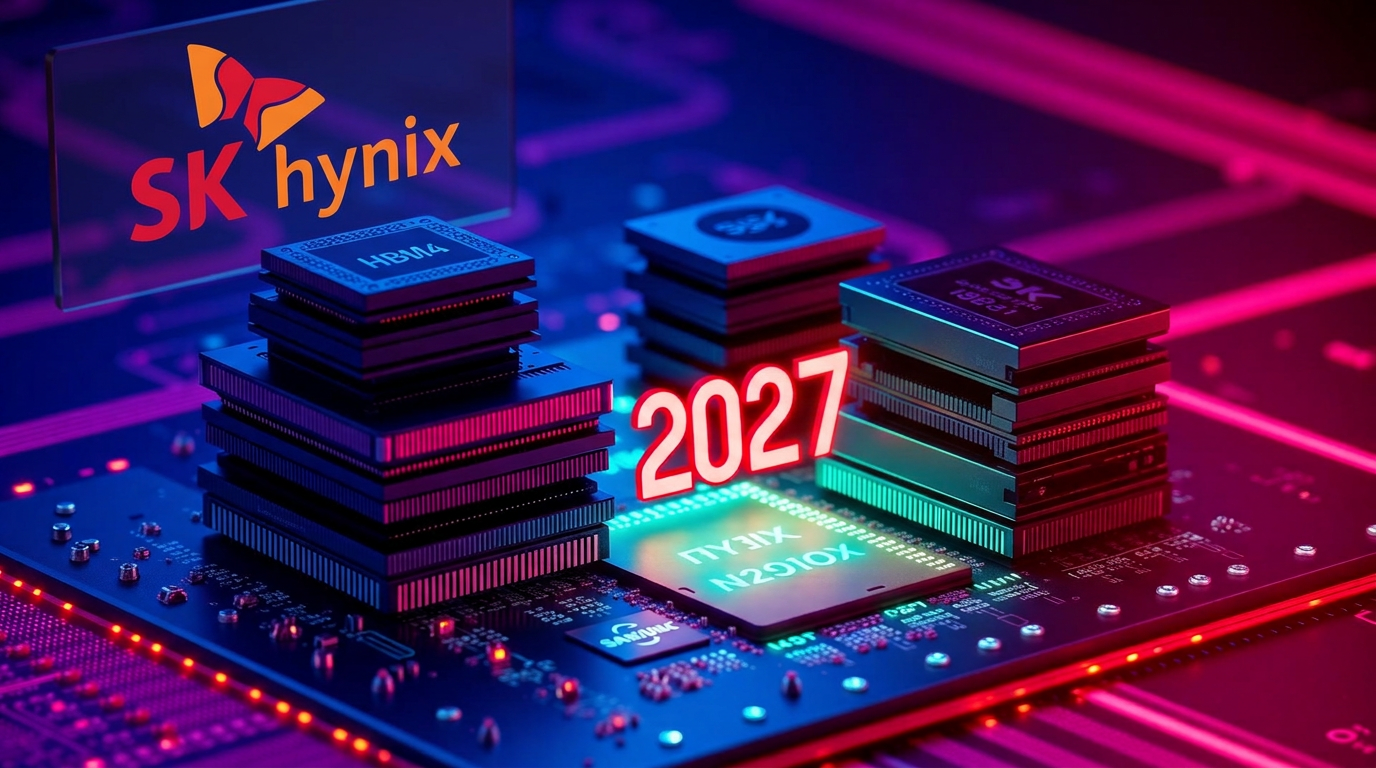
SK Hynix CEO Kwak Noh-jung told analysts that 2027 will be the single worst year of the ongoing DRAM and HBM shortage, and warned the crunch will last until 2030. The statement landed the same day SK Hynix debuted on the Nasdaq — a rare public admission from the world's largest HBM supplier that the AI-driven memory squeeze is a multi-year, structural event, not a cycle.
What SK Hynix actually said
Speaking on the day of the company's Nasdaq listing, CEO Kwak Noh-jung laid out a five-year forecast that shocked even bullish analysts. In his own framing, the industry is not recovering — it is entering the deepest phase of a shortage that began in 2025.
- • 2027 is the peak of the crunch, driven by HBM4 volume production for next-gen AI accelerators.
- • The shortage lasts until 2030 — new fab capacity coming online through 2028–2029 is largely pre-sold.
- • Consumer DRAM stays tight as long as HBM absorbs a disproportionate share of wafer starts.
- • Pricing power sits with suppliers, not buyers, for the remainder of the decade.
Why 2027 in particular
Every HBM4 stack uses several times the die area of a commodity DDR5 chip. Fabs cannot serve both markets at once.
Samsung, SK Hynix and Micron control >95% of DRAM. All three have publicly prioritized HBM4 through 2027.
Hyperscalers signed multi-year, take-or-pay HBM contracts. That volume is off the market — no matter what happens to consumer prices.
DDR4 lines are being decommissioned to convert to HBM/DDR5, so even the fallback tier is shrinking.
The 2025–2030 memory timeline
- 2025Shortage begins
HBM3E ramp for Blackwell + Instinct pulls Samsung, SK Hynix and Micron capacity off consumer DRAM.
- 2026Prices double
DDR5 kits triple; DDR4 doubles as buyers downgrade. OEMs pass 15–30% hikes onto laptops and pre-builts.
- 2027Worst year (SK Hynix)
CEO Kwak Noh-jung: HBM4 demand peaks, hyperscaler contracts front-loaded, virtually no spot capacity left for consumer bits.
- 2028–2029New fabs catch up slowly
Samsung P4, SK Hynix M15X, Micron Idaho + New York ramp — but most output pre-sold to AI customers.
- 2030Normalization
Supply and demand rebalance; DRAM floor pricing settles well above pre-2025 levels.
What breaks first
- Enterprise DDR5 RDIMMs. Server memory is the direct collateral of HBM prioritization — expect double-digit annual price growth into 2027.
- Consumer DDR5 kits. Retail 32GB and 64GB kits will keep drifting higher; deep discounts of the 2023–2024 era are not coming back this decade.
- DDR4-based platforms. Legacy servers and older gaming PCs face outright supply gaps as lines are converted to HBM/DDR5.
- Mid-range laptops and pre-builts. OEMs (Dell, HP, Lenovo) have already signaled 15–30% cost pass-through and lower base memory configs.
- Consoles and handhelds. Mid-generation refreshes and next-gen hardware face BOM pressure, delayed launches, and higher retail prices.
What it means for AI operators and miners
If your business depends on GPU memory bandwidth, the takeaway is simple: any HBM-equipped server you already own is worth more tomorrow than today. Rack pricing for HGX B200, B300, and GB200 NVL72 is firming, secondary-market values are rising, and lead times are getting longer — not shorter.
For crypto miners considering a pivot into AI inference, the RDIMM component of a host build is now a first-order cost. Existing fixed-function ASIC fleets (Bitcoin, Litecoin/Doge, Kaspa, Zcash) are largely insulated — ASICs don't consume DRAM the way GPUs do, so per-hash economics stay stable even as the wider memory market gets more expensive.
Every quarter of delay on an HGX B200/B300 order is a quarter of price risk you own.
Mining hardware sits outside the DRAM crunch — a rare island of stable per-watt economics.
Resale on HBM-equipped racks is rising through 2027 — don't liquidate at yesterday's prices.
The bottom line
SK Hynix listing on the Nasdaq is a symbolic moment — Korean memory now trades side by side with the U.S. hyperscalers driving demand for it. But the CEO's warning is the real story: the AI era has permanently reorganized the memory industry, and the shortage that started in 2025 has years, not months, to run.
2027 will be the worst year. The shortage lasts until 2030.
— Kwak Noh-jung, CEO, SK Hynix